If you’ve ever worked in a manufacturing warehouse, distribution center, or even a cold storage facility, you know that vertical conveyor systems are the unsung heroes of smooth material flow. They move pallets of groceries between dock levels, transport pharmaceutical products to temperature-controlled storage zones, and carry heavy machinery components across multi-story factories—all while keeping operations running without constant bottlenecks. But here’s a question I get from customers almost every day, especially those new to designing or retrofitting their spaces: “What’s the right insulation requirement for a vertical conveyor system?” As a supplier who’s installed these systems in thousands of facilities over 12 years, I don’t just cite generic industry numbers. I walk people through why insulation matters, how it ties to their unique space, and the mistakes I’ve seen companies make when they cut corners here. Vertical Conveyor Systems
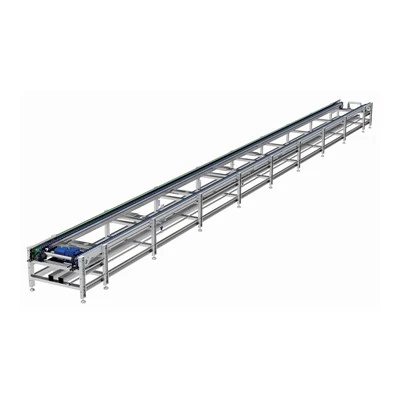
First, let’s ground this: vertical conveyor system insulation isn’t a one-size-fits-all rule. It’s not like choosing a standard pipe insulation thickness; the requirements shift based on three core factors: the ambient conditions around the conveyor, the materials being transported, and the local building codes that govern the space. Let’s start with the most common scenario I encounter: facilities operating in extreme temperatures, like cold storage warehouses or outdoor conveyor runs. A standard vertical conveyor moving pallets from a 0°F freezer to a 70°F loading dock will develop condensation if it’s uninsulated. That condensation isn’t just a minor nuisance—it drips onto pallets, can damage electronics in the conveyor’s motor or control panel, and even creates slip hazards for workers below. In one recent project, a mid-sized grocery distributor skipped insulation on their vertical conveyor connecting the main freezer to a staging area. Within three months, moisture had corroded the conveyor’s gear assembly, leading to 12 hours of unplanned downtime and a $15,000 repair bill. That’s the kind of cost no operator can absorb, which is why insulation is non-negotiable for temperature-controlled environments.
For these cold storage applications, the insulation requirement I recommend hits a minimum R-value of 8 per square foot. Wait, let’s clarify R-value: that’s the measure of a material’s ability to resist heat transfer, right? So an R-value of 8 means the insulation will slow heat gain from the 70°F dock into the 0°F conveyor shaft enough to prevent condensation. But it’s not just the layer of foam or fiberglass around the conveyor’s outer casing—we also insulate the access panels and control enclosures. Those are the spots most suppliers cut because they’re “small,” but they’re where condensation almost always forms. I’ve seen customers install a 1-inch rigid foam sheet around the main conveyor frame and skip the panel insulation, only to have moisture build up inside the control box, triggering a sensor failure. For outdoor vertical conveyors, used to move materials between ground-level yards and rooftop storage or loading bays, we bump that R-value up to 12. Outdoor spaces face extreme temperature swings—from 100°F summer heat to winter frost—and that extra insulation prevents heat loss in cold months and heat gain in hot ones, keeping the conveyor’s motor operating efficiently year-round.
Now, if your facility is a standard dry warehouse, not a cold storage or outdoor space, insulation requirements shift entirely. I know some operators look at insulation and think “it’s just for temperature control,” but that’s not true. In dry warehouses with high humidity—like those storing textiles, paper products, or grain—insulation prevents the conveyor’s metal components from rusting. Even a 1% humidity swing over 12 hours can cause surface rust on a vertical conveyor’s chain or rollers, which leads to friction, increased energy use, and premature wear. For these spaces, the minimum insulation requirement I outline is a ½-inch closed-cell foam wrap with an R-value of 3. While that’s a lower number than cold storage, it’s specifically tailored to prevent surface condensation and rust, not extreme temperature transfer. I had a customer in the textile industry a couple years back who installed uninsulated conveyors in a 65% humidity warehouse. Within a year, their conveyor’s rollers had rusted so badly they were vibrating constantly, and they had to replace half the system. Adding that thin foam wrap would have reduced humidity exposure by 40% on the metal surfaces, extending the conveyor’s lifespan by years.
Here’s where things get technical, and where I’ve seen companies misapply codes: vertical conveyor systems that run through fire-rated walls or floor assemblies have additional insulation requirements tied to building safety standards. Most North American facilities follow NFPA 80, the standard for fire doors and fire-resistant assemblies, which requires that any penetration through a fire-rated structure (like a vertical conveyor shaft) be sealed with insulation that matches the fire rating of the structure. So if your facility has a 2-hour fire-rated floor between the first and second levels, the insulation around the conveyor shaft in that penetration must also be rated for 2 hours. I once worked with a automotive parts manufacturing plant that tried to use a standard 1-hour insulation for a 2-hour rated penetration. When the local fire marshal inspected the facility during a routine check, they flagged it, forcing the plant to shut down the conveyor for three days while they re-insulated. That’s a avoidable delay, and it’s why checking local fire and building codes early in the project is critical.
Another factor I always highlight is the type of vertical conveyor system you’re using. There are two main types in our industry: reciprocating vertical conveyors (which move loads up and down on a platform) and continuous vertical conveyors (often called vertical lifts, which operate like a large escalator for pallets). Reciprocating systems are more enclosed, so their insulation requirements are focused on temperature control of the load, while continuous systems are often open, exposed to the surrounding air. For continuous vertical conveyors in high-humidity spaces, I recommend adding a vapor barrier over the insulation layer—something I don’t always suggest for reciprocating systems. That vapor barrier prevents moisture from seeping into the insulation, which would reduce its R-value over time. In one case, a customer in the beverage industry installed a continuous vertical conveyor without a vapor barrier in their 90% humidity bottling plant. Within 18 months, the fiberglass insulation had absorbed moisture, cutting its R-value in half, leading to condensation on the conveyor’s load platforms and water damage to the pallets of soda they were moving. Adding that vapor barrier would have solved that issue for just a small additional cost.
I also want to address a common misconception: some operators think that adding insulation will make the conveyor too bulky, taking up valuable space in their facility. That’s rarely the case. The insulation layers we use for most vertical conveyors are thin enough—usually between ½ inch and 2 inches—to fit within the standard frame dimensions of our systems. In fact, we design our conveyor frames with just enough clearance to accommodate the required insulation, so there’s no need to rework existing structural gaps. For facilities with very limited space, we can even use spray foam insulation, which adheres directly to the conveyor’s metal casing, creating a seamless layer that takes up almost no extra space. That’s a game-changer for retrofits, where space is already tight.
Let’s talk about long-term cost savings, because that’s what really matters to most operators. The upfront cost of insulation is usually 5-10% of the total vertical conveyor system cost, but the payoff is significant. Insulated conveyors use 15-20% less energy than uninsulated ones, because their motors don’t have to work as hard to maintain consistent temperatures in temperature-controlled spaces. They also require less maintenance: no corrosion, no sensor failures from condensation, no premature part replacement. I’ve had customers tell me that their insulated vertical conveyors have cut their annual maintenance costs by thousands of dollars, and extended the system’s lifespan by 3-5 years. That’s a return on investment that almost never gets calculated when companies are planning their conveyor installations.
Now, I’ll be the first to say that I don’t believe in one-size-fits-all requirements, even with these guidelines. Every facility has unique needs: a cold storage facility in Canada will have different insulation needs than a warehouse in Florida with high humidity, and a food processing plant will have different fire code requirements than a manufacturing plant with heavy metal components. That’s why as a vertical conveyor supplier, we don’t just sell conveyors—we work with customers to assess their specific space, ambient conditions, and operational needs to design the right insulation solution. We’ve installed insulated conveyors for frozen food distributors, pharmaceutical companies, automotive parts manufacturers, and retail distribution centers, and each time, we tailor the insulation to their exact use case.
If you’re currently designing a new facility, retrofitting an old one, or experiencing issues with your existing vertical conveyor system—like condensation, corrosion, unplanned downtime, or high energy costs—I can help. I’ve spent 12 years troubleshooting these exact problems, and I’ll walk you through the insulation requirements that make the most sense for your operation. We work with facilities of all sizes, from small warehouses to large national distribution centers, and we stand behind every system we install.
If you’re ready to talk through your specific needs, reach out to our team to discuss your vertical conveyor project. We’ll provide a no-obligation assessment of your space, outline the insulation requirements tailored to your operation, and walk you through the cost and benefits of the solution. Don’t let avoidable downtime or unplanned costs derail your operations—let’s make sure your vertical conveyor system is insulated to perform for years to come.
Material Handling Equipment References
- National Fire Protection Association. (2021). NFPA 80: Standard for Fire Doors and Other Opening Protectives. Quincy, MA: National Fire Protection Association.
- International Code Council. (2022). International Energy Conservation Code (IECC). Washington, D.C.: International Code Council.
- Cold Storage Association International. (2020). Best Practices for Cold Storage Facility Insulation and Humidity Control. Arlington, VA: Cold Storage Association International.
- Material Handling Industry of America. (2021). Vertical Conveyor System Design and Operation Guidelines. Charlotte, NC: Material Handling Industry of America.
Anhui Rayo Automation Technology Co., Ltd.
With abundant experience, we are one of the most professional vertical conveyor systems manufacturers and suppliers in China. Please feel free to wholesale advanced vertical conveyor systems in stock here and get quotation from our factory. All customized products are with high quality and competitive price.
Address: No.28 Yongzhen Road, Wuhu Area, China (Anhui) Pilot Free Trade Zone
E-mail: ahry@ahrayo.com
WebSite: https://www.rayosmart.com/
