Hey there! As an impeller supplier, I’ve seen firsthand how the concept of specific speed can significantly impact impeller selection. In this blog, I’m gonna break down what specific speed is, why it matters, and how it guides us in choosing the right impeller for different applications. Impeller

So, let’s start with the basics. Specific speed is a dimensionless number that combines the speed, flow rate, and head of a pump or a similar rotating machinery. It’s calculated using a fancy formula, but don’t worry, I’m not gonna bore you with that here. The important thing is that specific speed gives us a way to compare different pumps or impellers operating under various conditions.
Why does specific speed matter? Well, it’s like a secret code that tells us about the impeller’s shape, performance, and suitability for a particular job. Different specific speeds correspond to different impeller designs, each optimized for specific flow and head requirements.
When the specific speed is low (below about 500 in the US customary system), we’re looking at a radial flow impeller. These impellers are like little powerhouses for generating high heads at relatively low flow rates. They’re commonly used in applications where you need to push fluids against a lot of resistance, like in boiler feed pumps or high-pressure water injection systems. The blades on a radial flow impeller are curved backward, and they work by imparting a radial velocity to the fluid, which then gets converted into pressure.
On the other hand, high specific speed (above about 10,000) points us towards axial flow impellers. These are designed for moving large volumes of fluid at relatively low heads. Axial flow impellers have blades that are more like propellers, and they work by pushing the fluid axially along the impeller’s axis. You’ll often find them in applications like flood control pumps, cooling tower circulation, or large-scale water transfer where a high flow rate is the priority.
Now, what about those in-between specific speeds? That’s where mixed flow impellers come in. With specific speeds ranging from around 500 to 10,000, mixed flow impellers offer a balance between the high head capabilities of radial flow impellers and the high flow rates of axial flow impellers. The blades on a mixed flow impeller are shaped in a way that they impart both radial and axial velocity to the fluid. They’re commonly used in applications like irrigation pumps, where you need to move a decent amount of water at a moderate head.
When it comes to selecting the right impeller for a specific application, specific speed is a crucial factor. But it’s not the only one. We also need to consider other things like the type of fluid being pumped (is it water, oil, or something more viscous?), the operating temperature, the required efficiency, and the available space for the pump.
Let’s take a look at a real-world example. Suppose you’re running a small water treatment plant, and you need to pump water from a storage tank to a filtration unit. You know the required flow rate and the head (the pressure difference) that the pump needs to overcome. By calculating the specific speed based on these parameters, you can get an idea of what type of impeller would be the best fit. If the specific speed indicates a radial flow impeller, you’ll want to choose one with the right blade shape and size to ensure efficient operation.
But here’s the thing: even with the right specific speed in mind, there can still be some room for customization. That’s where we, as impeller suppliers, come in. We have the expertise and the resources to design and manufacture impellers that are tailored to your specific needs. Whether you need a slightly modified radial flow impeller to handle a particular type of fluid or a custom-made mixed flow impeller for a unique application, we can make it happen.
In addition to the shape and design of the impeller, specific speed also affects other performance characteristics. For example, the efficiency of an impeller can vary depending on its specific speed. Generally, impellers operate most efficiently at or near their design specific speed. If you operate a pump at a specific speed that’s far from its design point, you may experience reduced efficiency, increased energy consumption, and even premature wear and tear on the impeller.
Another aspect to consider is the cavitation potential. Cavitation occurs when the pressure of the fluid drops below its vapor pressure, causing bubbles to form and then collapse. This can lead to damage to the impeller and reduced pump performance. Specific speed can influence the likelihood of cavitation. Impellers with higher specific speeds are generally more prone to cavitation, especially at low suction pressures. As an impeller supplier, we take these factors into account when designing and selecting impellers to minimize the risk of cavitation.
So, how do you go about calculating the specific speed for your application? Well, there are some online calculators available that can help you with that, or you can consult with an engineer or a pump specialist. Once you have the specific speed value, you can use it as a starting point to narrow down your impeller options.
As an impeller supplier, we’re always here to help you make the right choice. We have a wide range of impellers in different sizes, materials, and designs to meet your diverse needs. Whether you’re a small business looking for a simple pump impeller or a large industrial facility in need of a high-performance solution, we’ve got you covered.
If you’re in the market for an impeller and want to learn more about how specific speed affects your selection, don’t hesitate to reach out. We can provide you with detailed technical information, offer customized solutions, and even help you with installation and maintenance. Let’s work together to find the perfect impeller for your application and ensure optimal performance and efficiency.
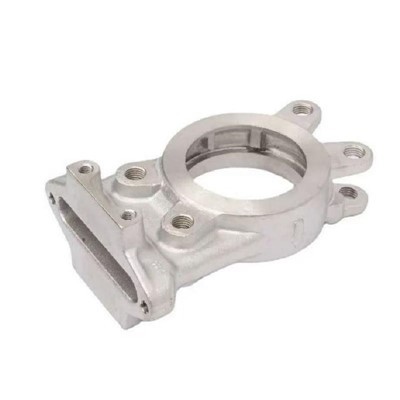
In conclusion, specific speed is a key factor in impeller selection. It gives us valuable insights into the impeller’s design, performance, and suitability for different applications. By understanding how specific speed works and working with a reliable impeller supplier, you can make informed decisions and get the most out of your pumping system.
Impeller References
- Hydraulic Institute Standards on Pumps.
- Turbomachinery textbook by some well – known professor.
- Industry whitepapers on impeller design and selection.
Shandong Shunye Stainless Steel Co., Ltd.
Shandong Shunye Stainless Steel Co., Ltd. is one of the most professional impeller manufacturers and suppliers in China, also supports customized service. Welcome to buy bulk cheap impeller made in China here and get quotation from our factory. For price consultation, contact us.
Address: Shandong Province, Binzhou City, Wudi County, Liubao Town, Zhangdong Road, Duliucun Village
E-mail: sales@wdshunye.com
WebSite: https://www.shunyecasting.com/
