If you’ve ever wandered through a museum or gallery and found yourself stopping dead in front of a single painting, sculpture, or artifact, wondering why it feels like that piece is talking to you while everything else fades to the background—chances are moving head lights were doing their job. As a moving head light supplier, I talk to museum curators, gallery managers, and AV technicians all the time, and I hear the same questions over and over: “How do I not overdo it?” “How do I make sure the light works for the exhibit, not against it?” “Why do some spaces feel flat and boring even with spotlights?” Moving Head Light

Let’s cut through the jargon and get real. Moving head lights aren’t just fancy party lights for concerts or club spaces—they’re some of the most powerful tools we have to turn a random exhibit into a memorable moment. For years, museums relied on fixed track lights or basic spotlights, but those have big limits: they don’t move, they can’t adjust for different textures, and they often cast harsh shadows that obscure details. Moving heads solve that, but only if you use them right. I’ve seen so many projects where someone bought a bunch of moving heads and just cranked them all to full brightness, and the result was a glare that made visitors squint instead of engage with the art. That’s not using the tool—that’s misusing it. So let’s break down how to actually use these lights to highlight exhibits, no flairy nonsense, just what works.
First, start with the basics of any good lighting design: know your exhibit. Every piece is different. A oil painting needs totally different light than a 10-foot tall bronze sculpture, or a fragile historical document that can’t handle too much UV exposure. I always tell clients to do a deep dive on the exhibit before touching a light control board. For example, if you’re lighting a watercolor painting—thin, delicate, prone to fading—you need low UV output, consistent color temperature, and zero harsh hot spots. A bronze sculpture? It has curves, peaks, and reflective surfaces that can catch glare, so you need a light that can angle in to those specific spots without spilling all over the adjacent wall. A large-scale installation art piece that changes with movement? You need moving heads that can track, adjust intensity on the fly, maybe even sync to subtle motion sensors.
Let’s talk about the most important part of moving heads for exhibits: flexibility. Fixed spotlights only do one thing—stay in one place at one brightness. Moving heads pan, tilt, zoom, and adjust intensity (oh, and color if you want it, but hold off on color for most exhibits first). Pan and tilt are obvious, but zoom is a game-changer for small artifacts. Say you have a 6-inch ancient coin on display—you don’t need a wide beam that lights up the whole case; you need a tight, focused beam that hits the coin without washing out the edge of the case. Zoom lets you tweak that beam width from super narrow (like a spotlight for a coin) to medium (for a small sculpture) to wide (for a large canvas or multi-piece installation). I’ve had curators tell me that zoom was the difference between their exhibit looking like a random object on a shelf and a focal point.
Next up, layering. This is where moving heads shine (pun totally intended, and I’ll own it). You don’t just use one light for an exhibit—you use layers to create depth, not flatness. Most traditional museum lighting uses one primary light, maybe a secondary fill light to cut shadows. But moving heads let you build layers that highlight different parts of the piece. Let’s use a marble statue as an example. Primary light: a moving head set to a 45-degree angle (the sweet spot for 3D objects) zoomed to a medium beam, low intensity, to light the whole statue evenly. Then a secondary moving head, angled slightly higher, with a narrower beam, to hit the statue’s face or outstretched hand—those parts people always lean in to see. Then maybe a subtle accent light, set to a very dim intensity, that grazes the edge of the statue to create a slight rim light, making it pop off the wall behind it instead of blending in. That layering takes practice, but moving heads make it easy because you can adjust each light independently, no hardwiring extra fixtures like you would with fixed lights.
Now, avoiding the big mistakes. This is the part that I see go wrong 9 times out of 10. First, glare. Moving heads are bright, but too much brightness aimed at a reflective surface (like a metal sculpture, a glass case, or even a glossy painting) will create glare that makes visitors can’t see the actual piece. The fix? Adjust the angle of the moving head by 15-20 degrees so the beam bounces away from the viewer’s eyes, not straight at them. For glass cases, tilt the light to hit the exhibit from below or above the line of sight, not straight on. Second, color temperature. Most exhibits look their best at 2700K to 3500K—warm white, not that harsh cool blue you see in office buildings. If you use too cool a temperature, paintings and artifacts look washed out, and historical pieces lose their warmth. Moving heads let you set a consistent color temperature across all fixtures, so every piece in a section has the same light, no weird mismatched tones. Third, over-movement. This is for exhibit sections that are designed to be dynamic, but most museum exhibits are static—they’re there for months or years, they don’t change. So don’t have moving heads panning and tilting all the time; that’s distracting. Save the motion for interactive exhibits or installations where movement is part of the art, not for a single painting that’s meant to be studied.
Wait, let’s also talk about adaptability for different spaces. Galleries are usually more open, with higher ceilings, so moving heads can be mounted on trusses or track systems (we make lightweight, easy-to-install mounts for both, by the way) to cover large areas without casting shadows from walls. Smaller museum cases, like for jewelry or small artifacts, need compact moving heads that fit in tight spaces—no bulky fixtures sticking out and ruining the clean look of the case. I had a client recently who had a exhibit of 19th century pocket watches, and they were using tiny moving heads mounted inside the top of the display case, zoomed to a super narrow beam that just hit the watch face. No glare, no spillover, just the watch looking like the treasure it is.
Another thing: UV and infrared output. This is non-negotiable for museums, especially for sensitive materials like textiles, paper, or old documents. Cheap moving heads (I see you, discount Amazon ones) often have high UV that will fade fabrics and brittle paper in months, not years. All the moving heads we supply are built with low-UV, full-spectrum LEDs that meet museum conservation standards. I always tell clients to ask for UV ratings when they’re buying—don’t assume all moving heads are safe for artifacts. It’s not worth ruining a $100,000 exhibit to save a few bucks on lights.
Let’s share a quick real example, because that’s what people trust. A few months back, I worked with a small contemporary art gallery in Brooklyn that was doing a show of large, textured abstract paintings. Before, they were using fixed track lights that washed out the thick impasto (the raised paint) on the canvases—all you saw was a flat color. We installed 8 of our compact moving heads mounted on adjustable trusses above the space. We set each to a 3000K color temperature, tight beams zoomed to just cover each painting, and angled them at 45 degrees. We added a subtle edge light (we call it a “backlight”) behind each canvas to make the textured brush strokes pop. After we installed it, the gallery told us that foot traffic doubled, and visitors were spending an average of 2 minutes longer at each painting—compared to 30 seconds before, when the flat lights made them look boring. That’s the power of using moving heads correctly, not just buying them.
Now, how to actually set this up? You don’t need to be a lighting designer with 10 years of experience. Most modern moving heads come with user-friendly control software, even basic models. Start with one exhibit first—test one light, adjust the angle and zoom, see how it looks. Add layers one at a time, so you’re not overwhelmed. If you’re unsure, work with a supplier that offers training (we do, by the way—free for all our clients, no fine print). We walk you through matching light to exhibits, adjusting color temperature, avoiding glare, and setting up simple lighting schemes that work for your space. You don’t need a fancy light board with 100 channels—most museum and gallery lighting is static, so a simple controller that lets you adjust brightness and angle for each moving head is more than enough.
Wait, one last thing: visitor experience. At the end of the day, lighting is for the people looking at the art, not for the lights themselves. If your moving heads are casting harsh shadows that make visitors squint, or if the exhibits are so over-lit that they hurt the eyes, you’re doing it wrong. The goal is to guide the visitor’s eye to what’s important, not to show off your lights. I always say: the best lighting is the one you don’t notice, but it makes the art impossible to look away from.
If you’re a museum curator, gallery manager, or AV tech who’s tired of flat, unengaging exhibit lighting, or if you’re renovating a space and want to try moving heads for the first time, don’t overcomplicate it. We’re here to help—whether you need advice on which models work for your space, training on how to set them up, or custom solutions for sensitive exhibits. Don’t settle for lighting that makes your amazing art get lost.
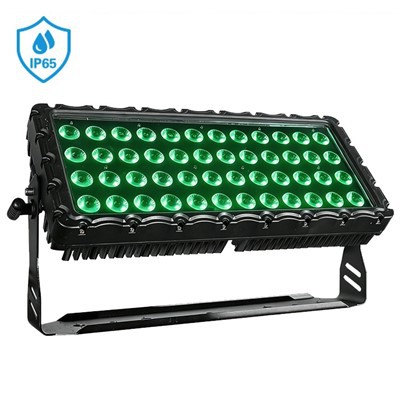
Got questions? Want to talk through your specific exhibit needs? Reach out to us to discuss your project, no pressure.
Moving Head Light References:
- International Council of Museums (ICOM). (2021). Museum Lighting Guidelines for Conservation and Visitor Experience.
- Illuminating Engineering Society (IES). (2019). Recommended Practice for Lighting Museums, Galleries, and Cultural Institutions.
- American Alliance of Museums (AAM). (2020). Best Practices for Lighting Sensitive Art and Artifacts.
Guangdong New Start Lighting Co., Ltd.
Guangdong New Start Lighting Co., Ltd. is one of the most professional moving head light manufacturers and suppliers in China. Welcome to wholesale durable moving head light in stock here and get quotation from our factory. All customized products are with high quality and competitive price.
Address: No.2, Hubin Road, Jiaoxin Village, Shimen Street, Baiyun District, Guangzhou, Guangdong, China
E-mail: newstartkate@gmail.com
WebSite: https://www.newstartlighting.com/
