Hey there! I’m a supplier of spindleless peeling machines, and I know how crucial it is to pick the right cutting tool for these machines. In this blog, I’ll share some tips on how to select the appropriate cutting tool for a spindleless peeling machine. Spindleless Peeling Machine

First off, let’s understand what a spindleless peeling machine does. It’s used to remove the outer layer of logs or other cylindrical materials. The cutting tool is the heart of this machine, as it directly affects the quality of the peeling process, the efficiency of the operation, and the overall cost.
Consider the Material You’re Peeling
The type of material you’re going to peel is the first thing to think about. Different woods have different densities, hardness, and moisture content. For example, softwoods like pine are easier to cut compared to hardwoods like oak or maple. If you’re dealing with softwoods, you can use a cutting tool with a relatively sharp edge and a lower cutting force requirement. On the other hand, for hardwoods, you’ll need a more robust and durable cutting tool that can withstand the higher resistance.
Some cutting tools are specifically designed for green wood, which has a higher moisture content. These tools are made to handle the extra lubrication and the different cutting characteristics of wet wood. If you’re peeling dry wood, the requirements will be different. Dry wood is often harder and more brittle, so you need a tool that can make clean cuts without causing the wood to splinter.
Cutting Tool Geometry
The geometry of the cutting tool plays a big role in how well it performs. There are several aspects to consider here.
The rake angle is one of the most important factors. A positive rake angle makes the cutting process easier as it reduces the cutting force. However, it also makes the cutting edge less strong. For softwoods, a larger positive rake angle can be used to increase the cutting efficiency. For hardwoods, a smaller positive or even a negative rake angle might be necessary to ensure the cutting edge can withstand the high forces.
The clearance angle is also crucial. It prevents the tool from rubbing against the workpiece, which can cause heat buildup and wear. A proper clearance angle ensures smooth cutting and reduces the risk of the tool getting stuck.
The shape of the cutting edge is another consideration. Some cutting tools have a straight edge, while others have a curved or serrated edge. A straight edge is good for making clean, smooth cuts, while a serrated edge can be more effective for rough peeling or for materials that are difficult to cut.
Tool Material
The material of the cutting tool is a key factor in its performance and durability. There are several common materials used for cutting tools in spindleless peeling machines.
High – speed steel (HSS) is a popular choice. It’s relatively inexpensive and has good cutting performance. HSS tools can hold a sharp edge for a reasonable amount of time, but they are not as hard as some other materials. They are suitable for peeling soft to medium – hard woods.
Carbide is a much harder material. Carbide cutting tools can withstand higher cutting speeds and are more resistant to wear. They are ideal for peeling hardwoods or for high – volume production. However, carbide tools are more expensive than HSS tools.
Ceramic cutting tools are also available. They are extremely hard and can cut at very high speeds. But they are brittle and can be easily damaged if not used properly. They are usually used in specific applications where high – precision cutting is required.
Cutting Speed and Feed Rate
The cutting speed and feed rate of the spindleless peeling machine also affect the choice of cutting tool. The cutting speed is the speed at which the cutting edge moves relative to the workpiece. A higher cutting speed can increase the productivity, but it also puts more stress on the cutting tool.
The feed rate is the speed at which the workpiece is fed into the cutting tool. A higher feed rate can also increase the productivity, but it requires a more robust cutting tool.
If you plan to operate the machine at high cutting speeds and feed rates, you’ll need a cutting tool that can handle the increased stress. For example, carbide tools are better suited for high – speed and high – feed operations compared to HSS tools.
Tool Coating
Tool coating can significantly improve the performance and lifespan of the cutting tool. There are several types of coatings available.
Titanium nitride (TiN) coating is one of the most common. It increases the hardness of the cutting tool and reduces friction. This means the tool can cut more efficiently and last longer. TiN – coated tools are suitable for a wide range of applications.
Titanium carbonitride (TiCN) coating is harder than TiN and provides better wear resistance. It’s a good choice for peeling hard materials or for high – volume production.
Diamond – like carbon (DLC) coating is extremely hard and has low friction. It can improve the cutting performance and reduce the adhesion of the material to the tool. DLC – coated tools are often used in high – precision cutting applications.
Cost and Maintenance
Cost is always a factor when selecting a cutting tool. While carbide tools are more expensive upfront, they can save you money in the long run due to their longer lifespan and better performance. On the other hand, HSS tools are more affordable, but they may need to be replaced more frequently.
Maintenance is also important. Some cutting tools require more frequent sharpening or replacement of parts. Make sure you consider the maintenance requirements when choosing a cutting tool. A tool that is easy to maintain can save you time and money in the long term.
Conclusion
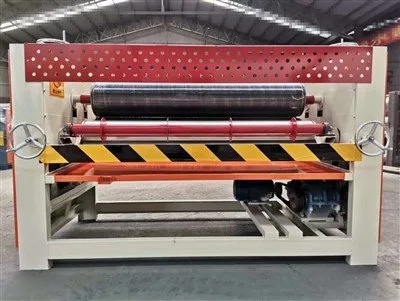
Selecting the appropriate cutting tool for a spindleless peeling machine is a complex process that involves considering several factors. You need to think about the material you’re peeling, the cutting tool geometry, the tool material, the cutting speed and feed rate, the tool coating, and the cost and maintenance.
Veneer Slicer If you’re in the market for a spindleless peeling machine or need help choosing the right cutting tool, don’t hesitate to reach out. We’re here to assist you in making the best decision for your business. Whether you’re a small – scale operator or a large – scale manufacturer, we can provide you with the right solutions. Contact us to start a discussion about your specific needs.
References
- "Wood Machining Technology" by Brian Hoadley
- "Cutting Tool Engineering" magazine
- Industry reports on spindleless peeling machine technology
Linyi Metro Machinery Co., Ltd.
As one of the most professional spindleless peeling machine manufacturers in China, we have world-leading production equipment and strong manufacturing capabilities. Please feel free to buy high quality spindleless peeling machine for sale here from our factory. Customized orders are welcome.
Address: NO.119,YanAn Road,YiHe New District,Linyi city,Shandong province,China.
E-mail: lovialiu@metromach.com
WebSite: https://www.metromach.com/
