If you’ve ever worked in industries like aerospace, oil and gas, polar exploration, or even the refrigerated warehouse logistics that keep grocery stores stocked year-round, you’ve probably found yourself asking: can standard cable assemblies hold up in frigid, low-temperature environments? As a cable assemblies and accessories supplier, I get this question all the time—not just from engineers drafting specs for a new deep-sea submersible or Antarctic research station, but also from small business owners upgrading their cold storage equipment who don’t want to replace every wire and harness every winter. The short answer is yes, but only if you skip the off-the-shelf parts and build for the cold. Let me break down what that actually means, from how temperature changes your cables to the choices that make all the difference when the mercury drops well below freezing. Cable Assemblies & Accessories
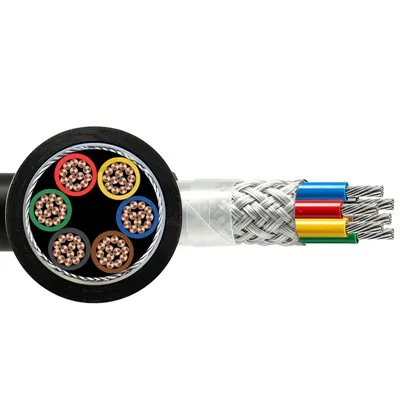
First, I need to explain why low temperatures wreak havoc on standard cable assemblies, because that’s the foundation of why our team spends so much time refining cold-resistant options. Most people don’t realize that all materials, from the copper inside a wire to the plastic jacket covering it, behave differently when it’s cold. Copper, which is the conductor in 90% of cable assemblies we supply, actually becomes stiffer and more brittle as temperatures drop. At room temperature, copper can bend and flex thousands of times without cracking, but when you get down to -40°C or lower, that same copper will snap if you so much as tug on it abruptly or bend it around a tight corner. Then there’s the jacket material. Standard PVC jackets, which are cheap and common for indoor use, harden at temperatures below 0°C, turning from a flexible rubber-like material into something as rigid as a soda bottle. That rigidity makes it impossible to route a cable through tight spaces or handle it without snapping the internal wires, and it also creates gaps between the conductor and the jacket—gaps that let moisture seep in, which freezes and expands, breaking the cable entirely. Even the connectors, the little plastic or metal parts that snap two cables together, have their own temperature limits. Standard nylon connectors will become brittle below -20°C, cracking if you drop them or apply any pressure, while basic metal connectors can corrode faster in cold, dry air than they would at room temperature, especially if there’s any residual moisture trapped inside them.
But here’s the good news: these aren’t permanent flaws, and they’re entirely fixable with intentional design choices. Over the past 12 years of working with industrial, aerospace, and logistics clients, I’ve seen firsthand how small tweaks to materials and construction turn a flimsy cable into one that works reliably in environments as cold as -65°C, and even lower for specialized applications. The first big choice is the conductor material. While pure copper works fine for room temperature, we often use tin-plated copper conductors for low-temperature assemblies. The tin plating adds a layer of flexibility that pure copper lacks, so when it gets cold, it doesn’t become brittle as quickly. We also use larger gauge conductors than standard, where possible, because thicker wire has more give—smaller gauge wire, like the thin stuff used for phone chargers, can’t flex when cold, but a 12-gauge wire for heavy machinery has enough flexibility to survive repeated bending even at -50°C.
Next is the jacket material, and this is where most suppliers cut corners, but we never do. We use cross-linked polyethylene (XLPE) jackets instead of PVC for all our cold-rated assemblies. XLPE is specifically engineered to stay flexible at temperatures as low as -60°C, so it doesn’t harden or crack when the weather turns. It’s also resistant to moisture and chemical exposure, which is a bonus for cold environments where there might be de-icing chemicals or brine from roads or sea water. For even colder applications, like aerospace parts that fly at high altitudes where temperatures can drop to -80°C, we use thermoplastic elastomer (TPE) jackets. TPE is stretchy, almost like natural rubber, and it stays flexible at temperatures below -100°C, which is critical for parts used in satellites or high-altitude research equipment. We also use silicone rubber jackets for some custom orders, because silicone works even in cryogenic temperatures (down to -120°C) and can handle extreme temperature swings that come with moving from a cold warehouse to a warm loading dock, for example.
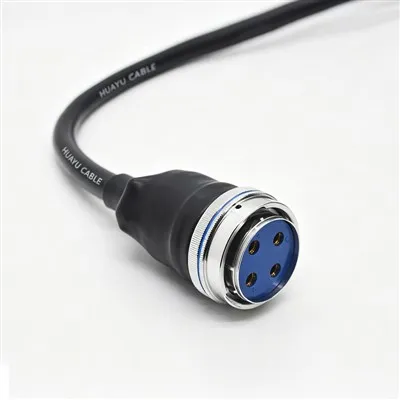
Connectors are another area where we invest heavily, because even the best cable is useless if the connector breaks. For low-temperature assemblies, we use nylon 6/12 connectors that are specifically rated for cold environments, not the generic nylon connectors sold for hobby projects. These engineered nylons stay flexible down to -40°C, so they don’t crack when you plug or unplug them in cold weather. We also add a layer of dielectric grease inside every cold-rated connector. That grease fills in any tiny gaps between the pins and the housing, preventing moisture from getting trapped and freezing. Moisture inside a connector is one of the most common causes of failure in cold environments—if a little water gets in, it expands when it freezes, pushing the pins apart and breaking the connection. The grease stops that from happening, and it also prevents corrosion from the cold, dry air that can cause pins to seize up over time. We also test every single custom cold assembly we build to make sure it works as advertised. We put them in temperature chambers that drop to -60°C, flex them thousands of times to simulate being handled or routed in a piece of equipment, and test electrical continuity to make sure the signal or power flows consistently. I’ve had clients tell me they tried cheaper, unrated cable assemblies for their Antarctic research stations, only to have half their cables crack after a week. Now they only use our cold-tested assemblies, because we stand behind them.
Now, you might be wondering: are there limits to how cold these assemblies can go? The answer is yes, but they’re far lower than most people think. Standard cold-rated assemblies we supply work reliably down to -60°C, which covers almost every common low-temperature environment—refrigerated warehouses, cold storage units, logging operations in northern Canada, even some polar field research. For applications colder than that, like cryogenic storage of medical samples or aerospace testing, we build custom assemblies with special materials like PTFE jackets and silver-plated conductors, which can handle temperatures as low as -200°C. Those are specialized, higher-cost parts, but they’re necessary for jobs where a single cable failure can shut down a whole operation.
I also want to address a common misconception: cold environments don’t just affect the cables themselves, they affect how the cables are installed and used. Even the best cold assembly won’t work if you route it around a sharp corner without enough slack, or if you bend it at a 90-degree angle when it’s cold. We always include installation guidelines with every cold assembly we supply, telling clients to leave extra slack in the cable so it can flex without being stretched, and to avoid tight bends when the cable is below freezing. That’s why we work closely with clients during the design phase—we don’t just sell them a cable and walk away. We ask them about their specific environment: how cold does it get there? Will the cable be exposed to moisture? How often will it be moved or bent? That way, we can recommend the exact materials and construction that will work best for their needs, no matter how extreme the conditions.
I’ve seen the impact of good cold cable assemblies firsthand. Last year, we worked with a large logistics company that was upgrading their cold storage facilities across the Midwest. Their old standard PVC cables were cracking every winter, leading to downtime that cost them thousands of dollars a day when their refrigeration systems failed. We supplied them with our XLPE-jacketed assemblies, and after a year of use, they reached out to say they hadn’t had a single cable failure. Another client is a small company that builds custom off-road utility vehicles for use in the Arctic. They needed cables that could handle temperatures as low as -45°C, so we built them custom assemblies with tin-plated copper conductors, TPE jackets, and cold-rated connectors. They told us those vehicles now work year-round, whereas before their old cables would fail after a few months in the field.
If you’re in the market for a cable assembly that works in low-temperature environments, there are a few things you should look for to make sure you’re getting a quality product, not a cheap knockoff. First, check for official temperature ratings. A reputable supplier will tell you exactly what temperature range their assemblies are rated for, and they’ll have test data to back that up. Don’t trust parts that just say “cold-resistant” on the box—those are usually standard parts with a different jacket, and they’ll fail when it gets really cold. Second, ask about the materials: make sure the conductor is tin-plated copper, the jacket is XLPE, TPE, or silicone, and the connectors are engineered for cold use, not generic parts. Third, work with a supplier that offers custom options. Every environment is different, and a one-size-fits-all cable won’t work for every application. That’s where a good supplier adds value—they can tailor the assembly to your specific needs, whether you need a small, flexible cable for a sensor in a cold storage unit or a heavy-duty cable for a piece of construction equipment in the Arctic.
At our company, we’ve been supplying cable assemblies and accessories for over a decade, and low-temperature applications have become one of our core specialties. We don’t just stock standard parts—we build custom assemblies to fit exactly what our clients need, and we test every single one before it leaves our facility. We know that when you’re working in a cold environment, downtime isn’t just an inconvenience—it can cost you money, delay projects, and even put safety at risk. That’s why we don’t cut corners on materials or testing, and we stand behind every assembly we supply.
If you’re working on a project that requires reliable cable assemblies in low-temperature environments, whether it’s a small cold storage unit, a large industrial facility, or a specialized piece of equipment for extreme conditions, I’d love to hear from you. We can walk through your needs, recommend the right materials and construction, and provide a custom quote that fits your budget and timeline. Don’t let cold temperatures derail your project—let us help you find the right cable solution that works when you need it most.
Power Cable Low Voltage References
ASTM D2136, Standard Specification for Chlorinated Polyethylene (CPE) Sheath for Jacketing Electrical Cable
IEC 60092-351, Electrical Installations in Ships – Part 351: Cables for Power and Control Installations
Underwriters Laboratories (UL) 758, Standard for Appliance Wiring Material for Low-Temperature Environments
Yangzhou Huayu Cable Co., Ltd.
Yangzhou Huayu Cable Co., Ltd. is one of the most professional cable assemblies & accessories manufacturers and suppliers in China, also supports customized service with low price. Please feel free to wholesale advanced cable assemblies & accessories made in China here from our factory. Contact us for pricelist.
Address: No. 9 Jingang Road, Yangzhou City, Jiangsu Province, China
E-mail: huayucableco@126.com
WebSite: https://www.huayucabletech.com/
